Profitable Growth: How to Grow Without Taking On More Risk
Key takeaways
- Revenue growth and profitable growth are not the same thing. More sales can leave you poorer if each one costs more to win and deliver than it returns.
- Profitable growth means the business earns more than it spends to grow, so expansion funds itself instead of leaning on debt or your reserves.
- The safest growth is paced to what the business can absorb, in people, cash, and systems. Outrunning that limit is where the risk lives.
- You lower the risk of growth by protecting margin, funding from profit and cash where you can, and growing in steps you can stop and correct.
Many owners measure growth by the top line, but revenue is only half the story. As the old line goes, revenue is vanity and cash from profit is sanity. Profitable growth is growth where profit and cash rise with the revenue, so the business gets stronger as it gets bigger, not more stretched. The question I hear from careful owners is a good one: how do I grow without betting the business. This piece answers it, the difference between revenue growth and profitable growth, how to fund expansion without piling on risk or debt, and how to grow at a pace the business can carry.
Let’s start with the word growth itself. It is used with so many assumed meanings that it is worth pinning down. I once asked a room of around 100 leaders what growth meant to them, and got 70 or so different definitions back. To one it was more revenue. To another, more profit, or a fatter margin on the same sales. Some meant more customers, or a bigger share of their market. Others meant more people, more locations, or a move into new territories. A few meant a more valuable business, worth more the day they choose to sell. And some meant something more personal: more freedom, less dependence on them, a business that finally ran without them in every decision. Each of those is a different destination, and each needs a different plan. The kind this piece is about is growth that leaves the business stronger and worth more, funded in a way that does not put it at risk.
I am a business growth consultant, a chartered management accountant, and a certified exit planner, and I have built and sold my own businesses. My accounting background means I have watched plenty of owners grow their revenue and shrink their bank balance in the same year. I went through it myself: I recall growing fast, the P&L looked great, and the cash flow nearly took us down. This is written for the established middle-market owner who wants the next stage of growth to leave the business more solid, not more fragile.
What is the difference between revenue growth and profitable growth?
Revenue growth is more sales. Profitable growth is more sales that leave more profit and more cash after everything it took to win and deliver them. The two usually move together, but not always. A business can grow its top line 30 percent, take on the extra staff, stock, space, and discounting to get there, and end the year with the same profit and less cash. That is revenue growth without profitable growth, and it is one of the most common ways a growing business gets into trouble. There are specific points in a company’s growth where this gets amplified. In my own experience, and in what owners I work with keep confirming, the band between roughly $14 million and $19 million in revenue is where it bites hardest. It is the same leadership stretch I describe in breaking a growth plateau: the business has outgrown the way it was run, the rising top line starts to consume cash faster than the business can generate it, and many teams meet that stretch by trial and error instead of by design, which makes it worse.
Profitable growth asks a harder question than “did we sell more.” It asks whether each new dollar of revenue brought a healthy margin with it, and whether the cash came in faster than it went out. When the answer is yes, growth compounds and funds itself. When it is no, growth eats cash, and the faster you grow the closer you get to the edge.
This is where venture-backed companies play a different game, and it helps to see why their playbook is not yours. Many VC-funded businesses chase revenue and market share ahead of profit on purpose, burning investor cash to win a winner-takes-most market before anyone else can. The bet is that dominance now pays off later, through profit after an IPO, a trade sale, or a further funding round that prices them on growth instead of earnings. It can work when the market is genuinely winner-takes-all and there is deep external capital to absorb years of losses. For the great majority of owner-run, middle-market businesses, neither of those conditions holds. You are funding growth from your own cash and your own balance sheet, there is no investor standing by to cover a shortfall, and running at a loss to buy share is a fast route to losing the business. Your version of winning is profitable growth, not growth at any cost.
Why chasing revenue can make you poorer
The classic trap is overtrading: growing sales faster than the business can fund them. New orders tie up cash in wages, stock, and work in progress long before the customer pays. Grow fast enough on thin margins and you can be profitable on paper and still run out of cash, which is how sound-looking businesses fail in a boom, not a bust.
I once launched a new country market for a privately held services business that was heading for an IPO. After getting it going I stepped away, and less than 24 months later I was asked back to help turn the group around and pull it out of bankruptcy administration. In the rush to look like a global player for an IPO on a European stock exchange, they had run out of cash and left it too late to secure funding. After I left they had opened four more geographic markets, launched too many service lines, and added too many support staff, all at once.
Growth also hides waste. When sales are climbing, sloppy pricing, creeping costs, and unprofitable customers are easy to miss. Take on volume at a discount to win it, and you can end up working far harder for the same profit, or less. More is not the goal. More that pays is.
How do I grow my business profitably without taking on too much risk?
The way to grow without betting the business is to grow deliberately, on the terms and the steps the business can carry. A few disciplines make the difference.
Know your numbers before you push. You cannot grow profitably if you cannot see which customers, products, and services make money after their true cost. A clear read on margin by line, and on how fast sales turn into cash, tells you what to grow and what to stop. This is the point where many owners bring in a fractional CFO or a growth consultant to get the visibility they have been missing.
Grow the profitable end, shrink the rest. Growth is a chance to improve the mix, not just enlarge it. Put your effort behind the customers and services with the best margins, and be willing to raise prices on, or let go of, the work that barely pays. A smaller, more profitable business grows into a bigger, more profitable one. A bigger, less profitable one just grows the problem.
Protect the margin as you scale. Watch that costs do not creep up faster than revenue, that discounts do not become the default, and that the cost of winning a customer stays well below what that customer is worth. Margin is the buffer that makes growth safe. Give it away and you remove your own margin for error, and your own ability to choose.
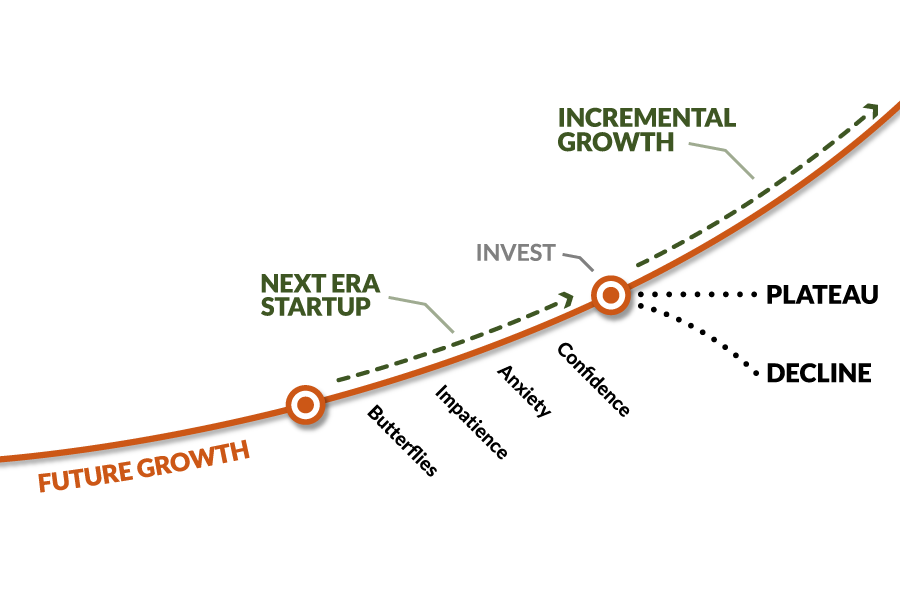
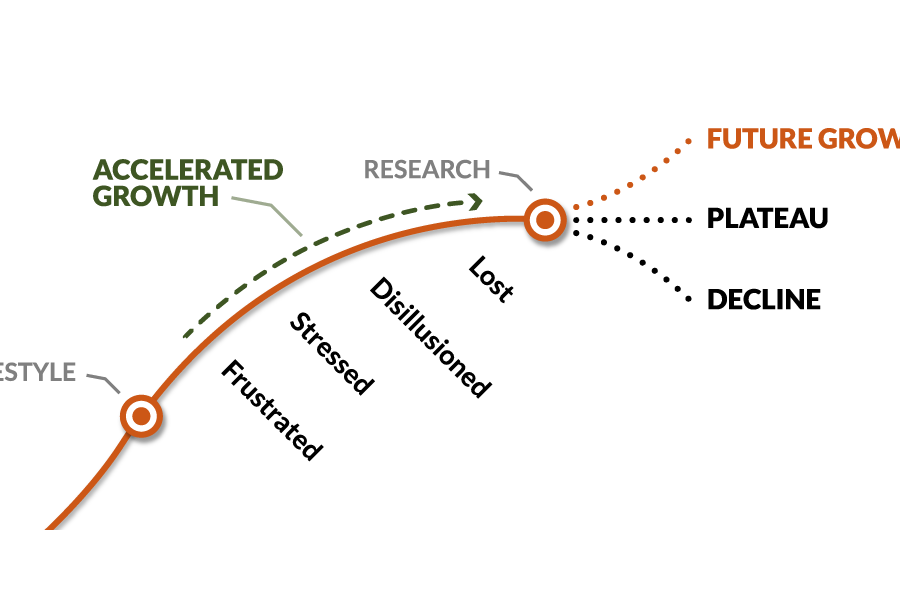
Grow in steps you can stop, at a rate you can manage. Experienced management teams know when to grow, and when to become efficient at a managed rate. The lowest-risk way to grow is in increments you can absorb and correct, not one leap you cannot walk back. Put another way, do not build a bathtub of capacity to hold a cupful of revenue, all in one go. Prove the next stage on a small scale, check the economics held, then commit more. My published guide on incremental versus exponential growth explains why pace is a choice, and the piece on the hidden pitfalls of accelerated growth covers what breaks when you grow faster than the business can take.
How to grow your business without debt
You do not have to fund growth with borrowing. The most durable growth is funded by the business itself: profit reinvested, and cash freed up from the way the business runs.
Fund it from profit first. Profitable growth generates the cash to pay for the next stage. When margins are healthy and you reinvest, growth compounds without a lender in the picture. This is slower than borrowing, and far safer, because the business is never carrying a repayment it has to meet whatever the market does.
Free the cash you already have. Before you borrow, look at the cash trapped inside the business: slow invoicing, long payment terms, overstocking, work sitting unbilled. Tightening the cash cycle can fund a surprising amount of growth from money that was already yours.
Use debt deliberately, not by default. There is a place for borrowing, to fund an asset that pays for itself, or to bridge a clear, short gap, but it should be a considered choice with a plan to repay, not the reflex that covers a business outrunning its own cash. Debt lifts both the return and the risk. In a soft market, the businesses that borrowed to grow are the ones that struggle first, which is why I have written separately about sustainable growth in a soft market.
Know when an equity investor makes sense. Sometimes the opportunity in front of you is genuine, time-limited, and bigger than your cash and profit can fund at the speed it needs. A land-grab market where being first counts, a product with a clear and closing window, or a step change that needs capital faster than the business can generate it, these are the conditions where bringing in an equity partner can be the right call. Equity is patient in a way debt is not: there is no repayment to meet in a downturn, and the right investor brings experience, networks, and discipline alongside the money. The trade is ownership and a share of control, so it only makes sense when the value of moving faster, with a partner who adds more than money, clearly outweighs the stake and the say you give up. Take equity for speed to market when the prize justifies it, not to prop up a business that is not yet profitable.
Grow at a pace the business can absorb
Every business has a speed limit set by its people, its cash, and its systems. Growth that respects that limit strengthens the business. Growth that ignores it strains everything at once: the team burns out, quality slips, cash runs short, and the culture frays. The skill is matching the pace of growth to what the business can carry, and building capacity ahead of demand so the limit keeps rising. It took me some tough experiences to learn these lessons.
Timing counts too. Growth is easier and cheaper to fund in some parts of the business and economic cycle than others. I have written about timing your growth to the business cycle, and the short version is that the best time to build capacity is before you need it, and the worst time to overreach is when the market is turning.
Business profitability tips that support growth
A handful of habits keep growth profitable as the business gets bigger.
- Price for value, not for volume. Better pricing drops almost straight to the bottom line, and is the fastest way to lift profit without lifting cost.
- Review margin by customer, market, and product, and act on it. Know your best and worst, and shift the mix toward the best.
- Watch cash as closely as profit. Invoice fast, collect faster, and keep a buffer so growth never leaves you exposed.
- Keep overhead lean as you grow. Add fixed cost only when the revenue to cover it is secure, not in anticipation of a good year.
- Reinvest with discipline. Put profit back into the drivers that compound, not into cost that only looks like progress.
Common mistakes
Confusing revenue with success, and celebrating a bigger top line while profit and cash stand still or fall. Buying growth with discounts, and training your market to expect the lower price for good. Funding growth with debt the business cannot service if the market softens. Growing faster than the cash cycle can support, so a profitable business runs out of money. And adding overhead and fixed cost ahead of secure revenue, so one slow quarter turns into a loss. Each one turns growth from a source of strength into a source of risk.
Where to start
Ask one question of your last year of growth: did profit and cash grow as fast as revenue. If revenue climbed and the other two did not, you have been growing the top line without growing the business, and the fix is margin and cash, not more sales. Start by finding your most and least profitable work, and shift your effort toward the former. Grow what pays, fund it from profit where you can, and pace it to what the business can absorb.
This is the work I do with owners as a business growth consultant and chartered management accountant: build the pricing, margin, and cash discipline that lets a business grow profitably and fund its own expansion, so growth leaves it stronger instead of stretched. I have grown my own businesses, and helped other owners grow theirs without betting the company. If you want to grow without taking on more risk than the business can carry, that is what I help with.
FAQ
What is the difference between revenue growth and profitable growth?
Revenue growth is more sales. Profitable growth is more sales that leave more profit and more cash after the cost of winning and delivering them. A business can grow its revenue and see profit and cash stand still, or fall, if the extra sales came with thin margins, heavy discounting, or a longer wait to get paid. Profitable growth is the kind that makes the business stronger, not just bigger.
How do I grow my business profitably without taking on too much risk?
Grow deliberately, on terms the business can carry. Know your margins by customer and product before you push, put your effort behind the profitable work and let go of the rest, protect the margin as you scale, and grow in steps you can stop and correct instead of one leap you cannot walk back. Fund it from profit and cash where you can, so growth never rests on a bet.
How can I grow my business without debt?
Fund growth from the business itself. Reinvest profit into the next stage, and free the cash already trapped in slow invoicing, long payment terms, and overstocking before you borrow. Use debt only as a deliberate choice for an asset that pays for itself or a clear short gap, with a plan to repay, not as the reflex that props up a business outrunning its own cash.
Can a business grow too fast?
Yes. Growing faster than the business can fund, staff, and systemize is one of the most common ways a profitable business gets into trouble. It ties up cash in orders you have not been paid for, burns out the team, and lets quality and margin slip. The safest pace is the one the business can absorb while building capacity ahead of demand.
What are the best business profitability tips for a growing business?
Price for value instead of volume, review margin by customer and product and shift the mix toward the best, watch cash as closely as profit, keep overhead lean until the revenue to cover it is secure, and reinvest profit into the drivers that compound. Small habits like these keep growth profitable as the business gets bigger.
Adrian Bray is a business growth consultant, certified exit planner, chartered management accountant, and former international M&A advisor who has built and sold his own businesses. He helps middle-market owners grow, build a business that runs without them, and prepare for an exit on their own terms. Part consultant, part peer who has been in your shoes. To grow profitably without taking on more risk, get in touch.