How to Scale a Small Business Without Losing Control
Key takeaways
- Scaling is not the same as growing. Growing adds revenue and cost together. Scaling grows revenue faster than the cost of producing it.
- You scale a small business by building the engine, a repeatable operating model, a leadership team, a predictable demand source, and the numbers to steer, before you pour on fuel.
- Scaling profitably means proving the unit economics first, then multiplying what works, not adding more of what barely pays.
- You keep control by letting go: control comes from systems, a capable team, and clear numbers, not from doing everything yourself.
Most owners want to grow, but what they need is to scale, and the two are not the same. Growing a small business tends to mean doing more of what you already do, with costs rising right alongside the revenue and will exceed them at critical points. Scaling means the business gets bigger without your costs, your stress, and your hours rising in lockstep. The fear that stops owners is losing control: more people, more customers, more moving parts, and the sense that the thing you built is getting away from you. This piece is about how to scale a small business the right way, profitably, and without losing your grip on it.
Growth versus scaling, and why the difference is worth understanding
Growth is more revenue. Scaling is more revenue without a matching rise in cost. A firm that doubles its clients by doubling its staff has grown. A firm that doubles its clients on a fraction more cost, because the work is systemized and the team is more productive, has scaled. My article on the difference between growth and scaling goes deeper, but the short version is this: scaling is what makes the business bigger than the sum of your hours, and it is the only kind of growth that makes the business more valuable and less dependent on you at the same time.
If your business has stalled, scaling is the way out, but only once the constraint that stalled it is fixed. My guide on breaking a growth plateau covers that diagnosis. This article assumes the diagnosis is done and the question is how to build for the next stage.
What it takes to scale a small business
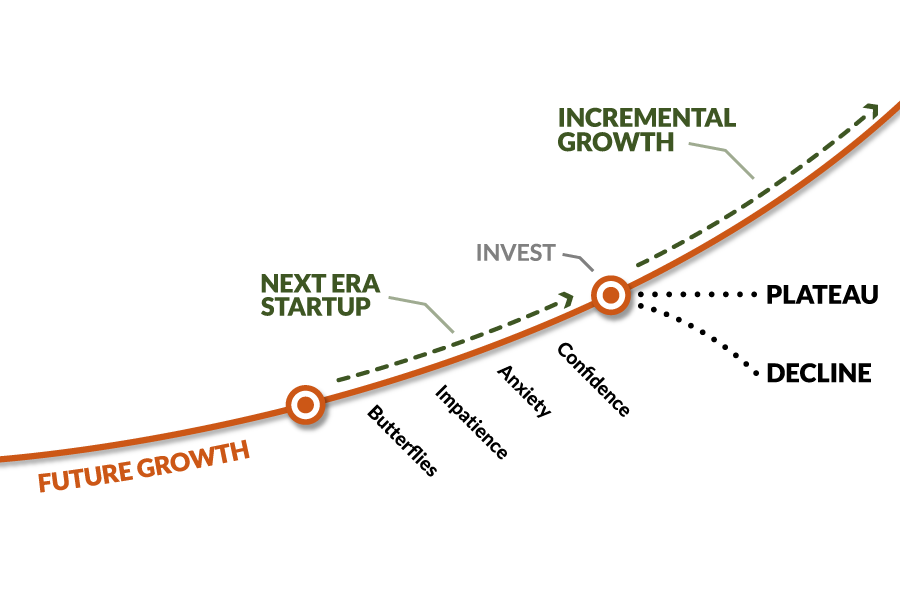
You cannot scale chaos. Pour growth onto a business held together by your personal effort and you get a bigger, more fragile version of the same problem. Scaling starts by building the engine that can carry more weight.
Scaling a business from $1 million to $10 million is a job of systemization and operationalizing the business. Below $1 million, the business is mostly focused on doing the work and surviving. Above it, the work becomes building the machine that does the work.
A repeatable operating model. The work that makes the money has to be documented, systemized, and consistent, so it produces the same result whoever does it. Systems are what let output grow faster than headcount.
A leadership team that runs the day-to-day. You cannot scale a business that still routes every decision through you. Build the layer of leaders who own outcomes, and get yourself out of the operating seat. My guide on building an owner-independent business is the deepest treatment of this in the series.
A predictable way to win customers. Scaling needs demand you can turn up on purpose, not word of mouth you hope for. A repeatable and consistent sales and marketing engine, one you understand well enough to invest in, is what lets you grow the top line deliberately.
People ahead of demand. Hire and develop the right capability the next stage needs before you are drowning, not after. Scaling businesses build a bench in a disciplined way; scrambling ones are always one departure from a crisis.
Numbers you can steer by. A simple dashboard of the few measures that decide health, revenue, pipeline, margin, cash, and capacity, tells you whether scaling is working before the bank balance does.
How to scale a small business profitably
Bigger is not the goal. More profitable at a larger size is the goal. Scaling a business profitably comes down to a few disciplines.
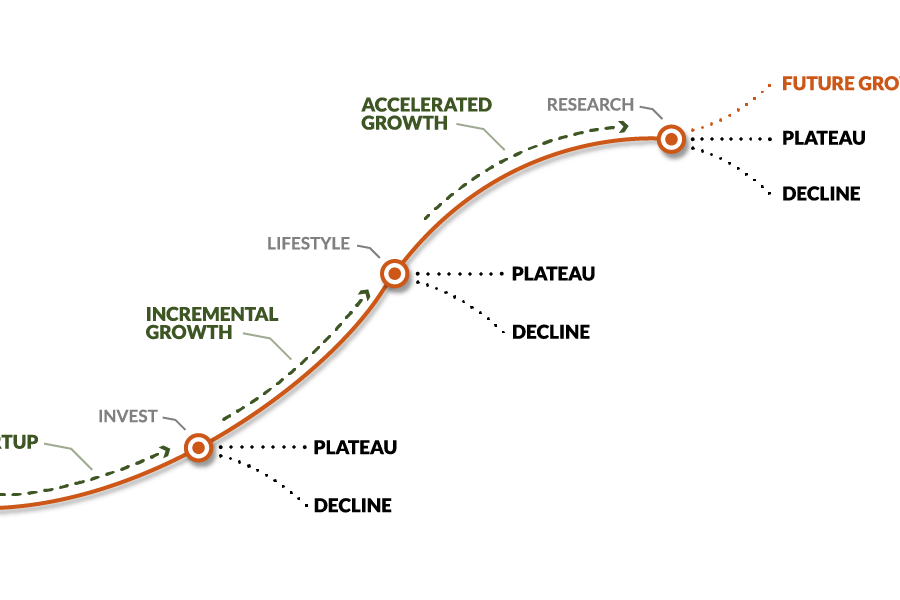
Prove the unit economics first. Before you pour money into growth, know that each unit of work, each customer, each product, makes money after the true cost of delivering it. Scaling a model that loses a little on every sale just loses more, faster. Know your step changes, the points where the unit economics change as you grow.
Multiply what works, starve what does not. Scaling is not the time for a dozen experiments. Find the two or three things that are proven to be profitable and repeatable, and put your capital and attention there.
Protect the margin as you grow. Growth hides inefficiency. As you scale, watch that costs do not quietly creep up faster than revenue, that discounts do not become the norm, as your team chase revenue at all costs, and that the delivery model stays as lean and aligned as it was small. Understand your step costs, the fixed and semi-fixed costs you have to add to lift capacity, so a jump in volume does not quietly wreck the margin. My published guide on scaling without the hidden risks goes through the traps in detail.
How to scale without losing control
Here is the paradox at the heart of scaling: the more you try to keep control by holding on, the faster you lose it. A business that depends on you cannot grow past you, and the harder you cling, the more it strains. True control at scale comes from a different place.
Control comes from systems, not from your hands on everything. When the process is documented and consistent, you control the outcome without touching every task. Control comes from a capable team with clear decision rights, so you know who decides what and can trust them to. And control comes from the numbers, a dashboard and a review rhythm that let you see what is happening across a bigger business without being in every room.
Culture is the quiet part of control. As you add people, the values and standards that lived in your head have to become explicit, so the business behaves the way you would even when you are not there. Owners who scale well keep their hand on the strategy, the culture, and the numbers, and take it off the daily work. That is how you grow the business and keep it yours.
Small business growth strategies that scale
Not every growth tactic scales. The strongest small business growth strategies are the ones that add revenue without adding proportional cost.
Sell more to the customers you already have. Expanding what existing customers buy is the cheapest, most scalable growth there is, because the relationship and trust are already paid for.
Build recurring revenue. Contracts, retainers, and subscriptions turn one-off effort into income that compounds, and they make the business steadier and more valuable as it grows.
Productize what you do. Turning a bespoke service into a repeatable package or product lets you deliver it more consistently and at a lower cost each time.
Add a channel or a segment, once the core is solid. A new market or a new route to customers can restart the climb, but only after the base model is proven and systemized enough to carry it.
Use pricing as a lever. Better pricing drops almost entirely to the bottom line, which makes it one of the fastest ways to scale profit, not just revenue.
Common scaling mistakes
Scaling too early, before the model is proven, so you multiply a loss. Scaling the owner-dependent version of the business, so every new customer adds to the load on you. Chasing growth so hard that margin, culture, and quality quietly erode. And confusing being busy with scaling, adding activity instead of building the engine that lets output outpace effort. Each one turns scaling into a faster route to burnout instead of a bigger, better business.
Hiring a COO and dumping your workload on them. A common mistake I have seen is hiring a COO and offloading the tasks you do, without giving them the room to develop and build the platform that supports scaling. The COO becomes a black hole within eighteen months and quits within two years, and I get called in to fix the aftermath.
Treating documentation as a one-time job. Thinking that because you captured the work once, it is finished. It is not. As a business scales, roles get more specialist, processes and workflows have to adapt, and the client base itself changes and grows more sophisticated.
Building incrementally instead of from the vision. Most small businesses plan year after year, building on where they were, instead of tying the plan to where they are going and designing the build-out backward from that scale vision.
Where to start
Before you try to scale, ask one question: if you tripled the volume tomorrow, what would break first? The answer is where to build. For most small businesses it is either the owner as the bottleneck or a delivery model that only works by hand, so start by systemizing the core work and building the team to run it. Prove the economics, build the engine, then add fuel.
This is the work I do with owners as a business growth consultant: build the operating model, the team, and the numbers that let a business scale profitably and run without its founder, so growth makes the business stronger instead of more fragile. I have scaled my own businesses and helped other owners do it without losing control. If you want to grow without the business running you, that is what I help with.
FAQ
How do I scale a small business?
Build the engine before you add fuel: a documented, repeatable operating model, a leadership team that runs the day-to-day, a predictable way to win customers, people hired ahead of demand, and a simple dashboard to steer by. Then multiply what is proven to work, instead of adding more of everything.
What is the difference between growing and scaling a business?
Growing adds revenue and cost together, more clients by way of more staff. Scaling grows revenue faster than the cost of delivering it, because the work is systemized and the team is more productive. Scaling is the kind of growth that raises profit and value without raising your hours.
How do I scale my small business without losing control?
Control at scale comes from systems, a capable team with clear decision rights, and the numbers to steer by, not from doing everything yourself. Document the work, hand genuine ownership to your leaders, make the culture explicit, and keep your hand on strategy and the numbers while taking it off the daily tasks.
How do I scale a business profitably?
Prove the unit economics before you invest, so each customer and product makes money after its true cost. Then put your capital into the two or three things that are proven and repeatable, and protect the margin as you grow so costs do not creep up faster than revenue.
What are the best small business growth strategies to scale fast?
The ones that add revenue without adding matching cost: selling more to existing customers, building recurring revenue, productizing your service, sharpening pricing, and adding a new channel or segment once the core model is proven and systemized. Fast and durable both depend on scaling a model that already works.
Adrian Bray is a business growth consultant, certified exit planner, chartered management accountant, and former international M&A advisor who has built and sold his own businesses. He helps middle-market owners grow, build a business that runs without them, and prepare for an exit on their own terms. Part consultant, part peer who has been in your shoes. To scale your business without losing control, get in touch.