Why Your Business Stopped Growing (and How to Break the Plateau)
Key takeaways
- A plateau is not failure. It is the model that got you here running out of room, and breaking out takes a different move, not just more effort.
- Growth stalls for a short list of reasons: the owner is the ceiling, the model has maxed out, the team, systems, or structure cannot carry more, the leadership’s skills have not kept pace, or focus has scattered.
- Breaking through starts by naming the one constraint that is capping your business, then aiming everything at it, instead of spreading effort across all of them.
- For most younger middle-market businesses the fastest unlock is removing the owner as the bottleneck, then concentrating on fewer, bigger bets.
Every business that grows eventually hits a plateau, and will hit others along its journey. Revenue flattens, profit retracts, the moves that used to work stop working, and you find yourself busier than ever with less to show for it. I have hit it in my own businesses, and I have helped plenty of owners climb out of it since. The plateau is not a verdict on you or the business. It is a sign that what got you here will not get you to the next stage, and that a different move is needed. This piece is about why growth stalls and how to break through.
What is a business growth plateau?
A business growth plateau is a stretch where revenue and profit stop climbing despite the same or greater effort. The graph goes flat. New work replaces lost work instead of adding to it. You are working harder to stand still, stress builds, and the levers that reliably produced growth a few years ago have quietly stopped responding.
A plateau is different from a decline, and it is different from a pause. It is the business bumping against a ceiling built into how it currently runs. Push against that ceiling with more hours and more hustle and you get exhausted, not bigger. Break the ceiling itself and growth resumes.
Where a stall sits in the business cycle
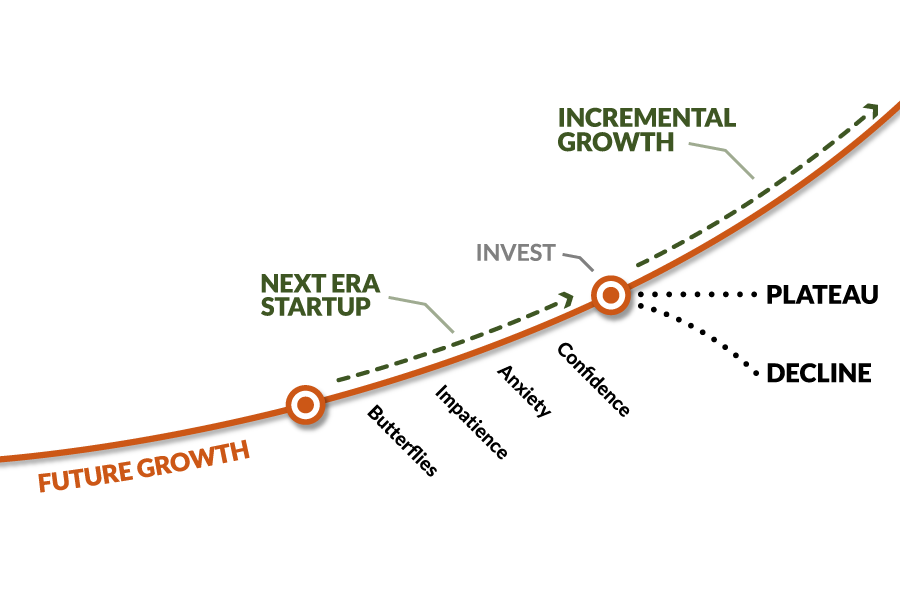
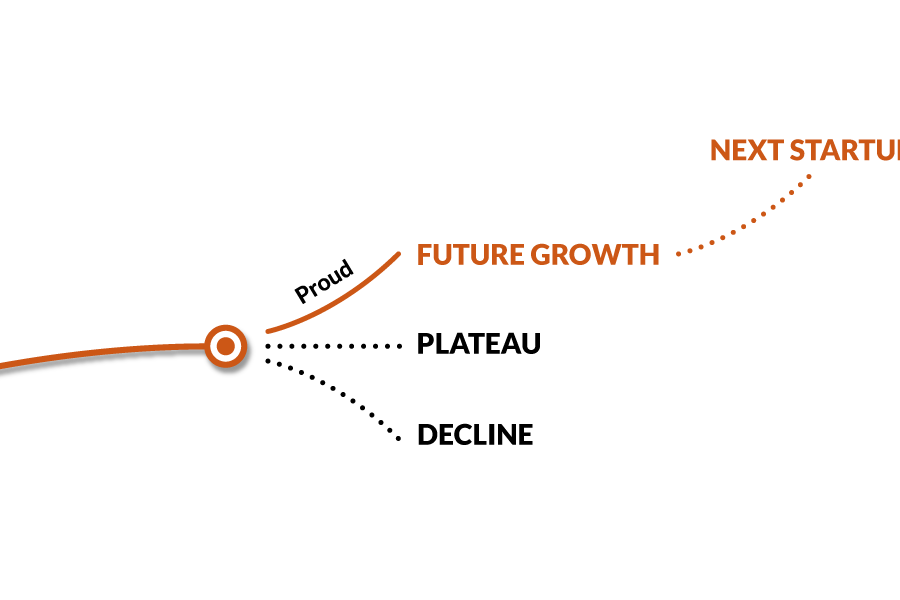
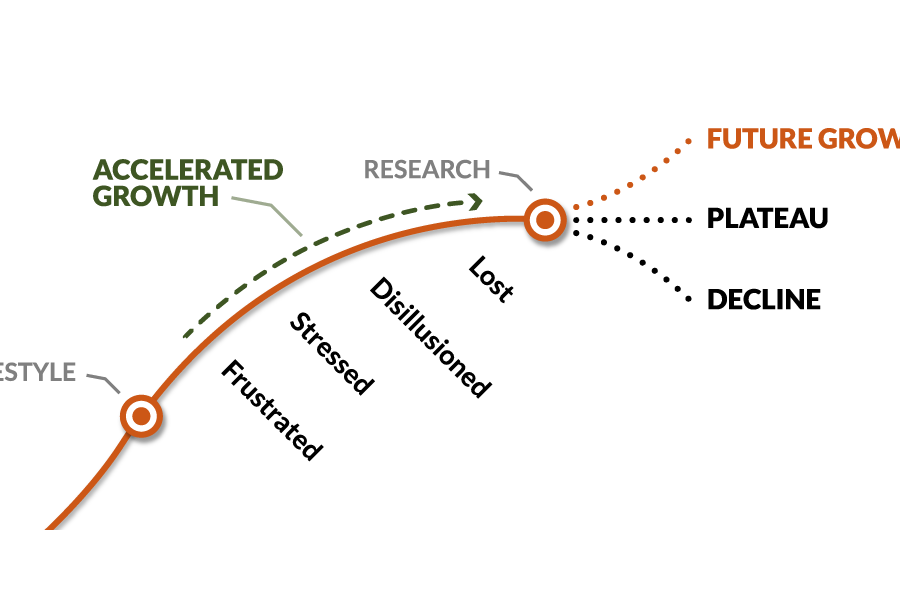
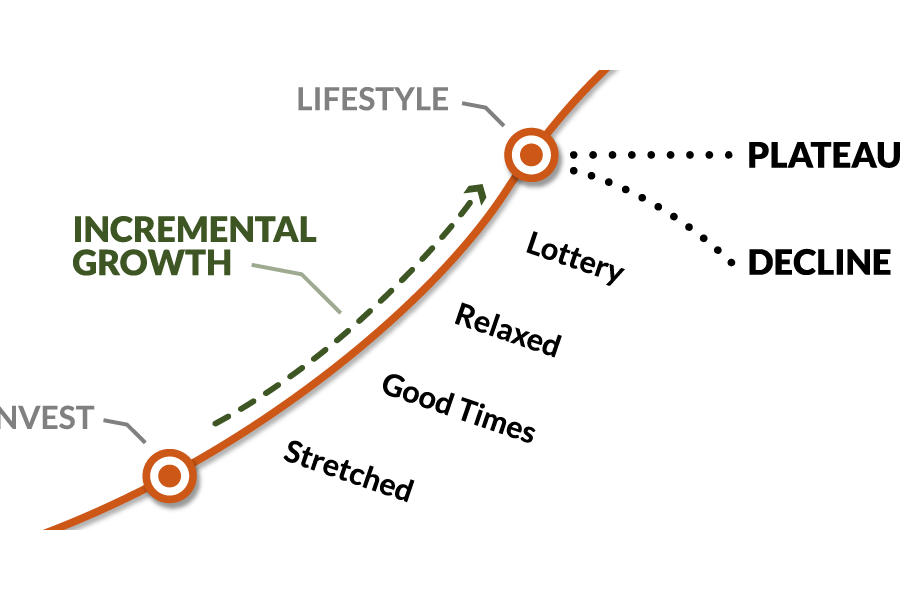
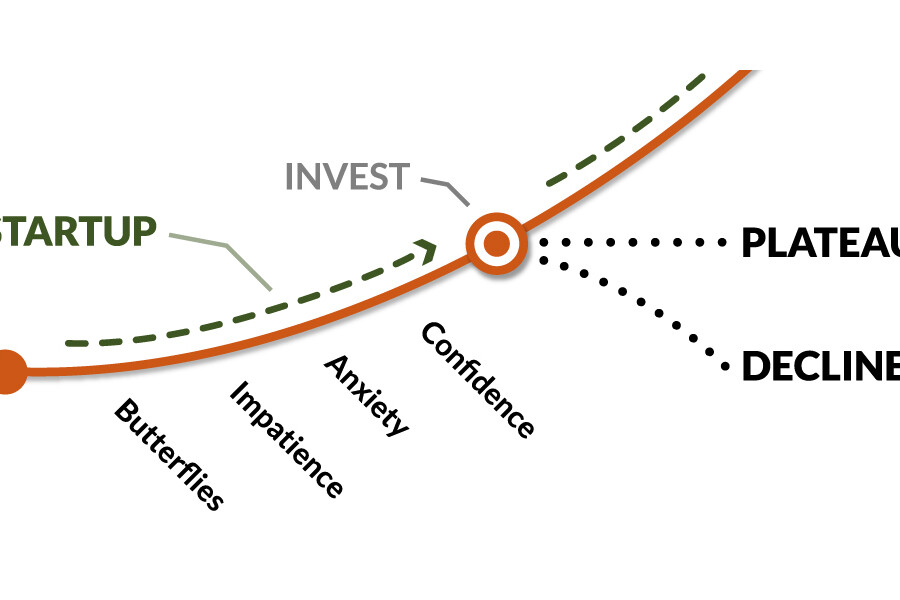
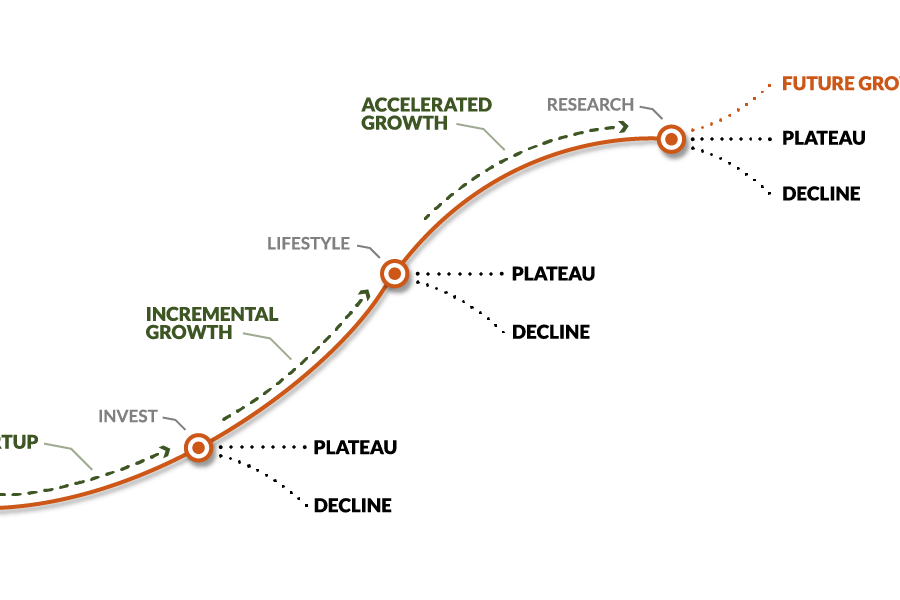
A plateau is a stage, not a dead end. Every business moves through a growth cycle, startup, incremental growth, accelerated growth, maturity, and then either renewal or decline, and the stall tends to arrive as the business matures and the moves that built it stop paying off. Reading it as a stage, not a personal failure, is what lets you act instead of stew. My article on timing your business cycle strategy sets out the three cycles that decide where you stand: the economic cycle, your industry cycle, and your own business growth cycle.
That distinction is worth drawing, because stalls come from two directions. External stalls come from the economic or industry cycle, a soft market or a maturing sector, and they call for a different response than internal ones. Internal stalls come from how the business is built and led, and those are the ones most within your control. This piece is about the internal stall and how to break it. If you are not yet sure whether you are stalling, my post on the hidden signs of a stalling business lays them out, and if the frustration has worn you down, my post on turning frustration back into passion is about getting your drive back.
Plateaus also come in different lengths, depending on the growth phase that preceded them and what you did to sustain the momentum. Internal plateaus have a variety of causes, and which one bites depends on the phase or stage the business is in within its own cycle. Common ones include an inability to invest, operational problems, weak infrastructure, and the skills and capabilities of your leadership team.
Why has my business stopped growing?
Growth rarely stalls for one dramatic reason. It stalls for one of a handful of quiet ones, and naming yours is the first step.
You are the ceiling. In most middle-market businesses the owner, and how they manage, is a key constraint. If sales, key relationships, pricing, hiring, and the hard decisions all run through you, the business can only grow to the size of your personal capacity, and you hit that wall long before the market does. My guide on building an owner-independent business covers how to remove yourself as the bottleneck.
The team and systems cannot carry more. Growth needs capacity. If your people are stretched, your processes live in your head or theirs, and there is no one ready to lead, the business physically cannot take on more without breaking.
You have outgrown your structure. Close to the two points above, but this one is about effectiveness, not raw capacity. The business has added people in each function, yet they are still run the old way. Money goes in, revenue barely moves, and costs climb sharply.
The model has maxed out. The same offer, sold to the same kind of customer, through the same channel, eventually saturates. What looks like a plateau is commonly a business that has fully worked its current market and has not built the next engine.
Focus has scattered. Success brings options, and options bring distraction. Many plateaued businesses are busy across too many products, customers, and side projects, spreading their best energy thin instead of concentrating it where it compounds.
Management capabilities have gone stale. As a business grows, so do the demands on management skills and capabilities. What it takes to run a business below $12 million is very different from what it takes above $20 million, and leadership that has not grown with the business becomes a cap on it.
You took your foot off. After years of hard driving, comfort and fatigue creep in. The business is doing fine, the pressure eased, and without quite deciding to, you stopped pushing for the next level.
Externally, the market moved. At times the ground changes, a new competitor, a change in what customers want, a channel that stops working, and the business keeps running the old playbook against a new game.
It is one or two of these, not all eight. The skill is being straight with yourself about which.
How do I break through a revenue plateau?
Breaking a plateau is not about working harder at what stopped working. It is a sequence.
Identify and name the true constraint and its source. Before you act, diagnose. What is the one thing that, if it changed, would unlock the most growth? For most owners it is their own involvement, or a lack of focus, but resist the urge to guess. Look at where work bottlenecks, where decisions wait, where you have been throwing people at a problem, and where your best people are stretched.
Get yourself out of the way. If you are the ceiling, this is the unlock. Build a leadership team that decides without you, document how the work gets done, and move customer relationships to the company. The business cannot grow past you until it can run without you. This takes an operational restructure, not just shifting your workload onto already stretched favorite team members.
Concentrate, do not scatter. Pick the two or three bets with the biggest upside and starve the rest of your attention. Plateaus break in this scenario when a business does fewer things with more force, not more things with less.
Build the capacity to grow, and make sure that capacity is effective. Put in the people, the systems, and the leadership the next stage needs before you need them, not after. Capacity built ahead of demand is what lets you say yes to growth instead of choking on it. But adding capacity without making its use more effective and efficient is a mistake I see again and again.
Find the next lever. When the current model is tapped out, growth comes from a new one: better pricing, a new customer segment, a new offer to existing customers, a new channel, or lifting retention so you stop refilling a leaky bucket. One well-chosen new lever restarts the climb. This is also the point to consider scaling, growing revenue faster than cost, not just adding more of the same; my article on the difference between growth and scaling covers when to make that move.
One example brings the sequence together. I worked with a legal firm that had grown its headcount tenfold in three years. They had added capacity but never properly addressed how the work was processed. Clients were frustrated by how long their cases took, the partners were disillusioned and fighting, and the staff came in like zombies, all working flat out but still following the way they had worked when the practice was a fraction of the size. Revenue had hit a ceiling while costs kept climbing.
We flipped the operating model and looked at the work like a factory floor: which step needed which level of skill, where the bottlenecks sat, where cases fell through the gaps, and where expensive senior people were doing junior work. Then we looked at who had the ability to step up and how fast they could be trained. The management team learned to run the business this way, alongside the traditional legal-delivery approach.
The result was more than 30% of capacity freed up compared with the old method. We moved some of that capacity into new roles, which released the revenue and profit that had been log-jammed. Clients grew happier, and a new generation of partners was able to step up, run the practice, and buy out the ones who felt trapped.
Put a plan on it, with clear responsibilities, success criteria, and accountability. A plateau rarely breaks on good intentions. Set a small number of clear targets, a rhythm to review them, and someone who holds you to the work when the day-to-day tries to pull you back.
Common plateau traps
The traps are as predictable as the causes. Working harder at the thing that already stopped working, because effort feels like progress. Chasing shiny new ideas instead of fixing the constraint that is holding you back. Cutting costs to protect profit and quietly starving the business of the growth you need. And blaming the market, which feels better than looking at the model or the mirror. Each one keeps you busy and keeps the ceiling exactly where it is.
Where to start
Name your one constraint this week. If the business would grow the moment you were less involved, start there. If your numbers are fine but nothing is moving, your problem is focus or a tapped-out model, and the fix is choosing fewer, bigger bets and building the next lever. Write down the single change that would unlock the most growth, and make it the work for the next ninety days.
This is the work I do with owners as a business growth consultant: find the true constraint behind a stalled business, remove it, and build the plan and the effective capacity to grow again. I have driven through, and stumbled inside, my own plateaus, and helped other owners break theirs. If your business has stopped growing and you want to know why and what to do about it, that is what I help with.
FAQ
Why has my business stopped growing?
One of a handful of reasons: the business depends too much on you or a key person, so it has grown to the limit of personal capacity; the model has saturated its current market; the team and systems cannot carry more; you have outgrown your structure, so added capacity is still run the old way; the leadership’s skills have not kept pace with the size; focus has scattered; the market moved; or the drive that built the business has eased off. Naming which one is the first step to fixing it.
How do I break through a revenue plateau in my small business?
Diagnose the one constraint capping profitable growth, then aim everything at it. For most owners that means removing themselves as the bottleneck, concentrating on two or three bets instead of many, building the team and systems for the next stage, and adding a new growth lever like pricing, a new segment, or better retention. Put clear targets and accountability on it.
How do I overcome business stagnation?
Stop pushing harder on what stopped working and change the move instead. Find the ceiling built into how the business runs, most commonly the owner, an exhausted model, an outgrown structure, management skills that have not kept pace, or scattered focus, and break that specific thing. Stagnation ends when you fix the constraint, not when you add more effort.
What is a business growth plateau?
A stretch where revenue and profit stop climbing despite the same or greater effort, because the business has hit a ceiling built into how it currently runs. It is not a decline, and it is not solved by working harder. It breaks when you change what is capping growth.
Why is my business revenue stuck?
Stuck revenue almost always traces to a single constraint: you as the bottleneck, a saturated model, capacity that is run the old, inefficient way, or effort spread too thin. Find that one thing, aim your best energy at it, and the number starts moving again.
Adrian Bray is a business growth consultant, certified exit planner, chartered management accountant, and former international M&A advisor who has built and sold his own businesses. He helps middle-market owners grow, build a business that runs without them, and prepare for an exit on their own terms. Part consultant, part peer who has been in your shoes. To find what is capping your growth and build the plan to break through, get in touch.